

The Hashemite Kingdom of Jordan
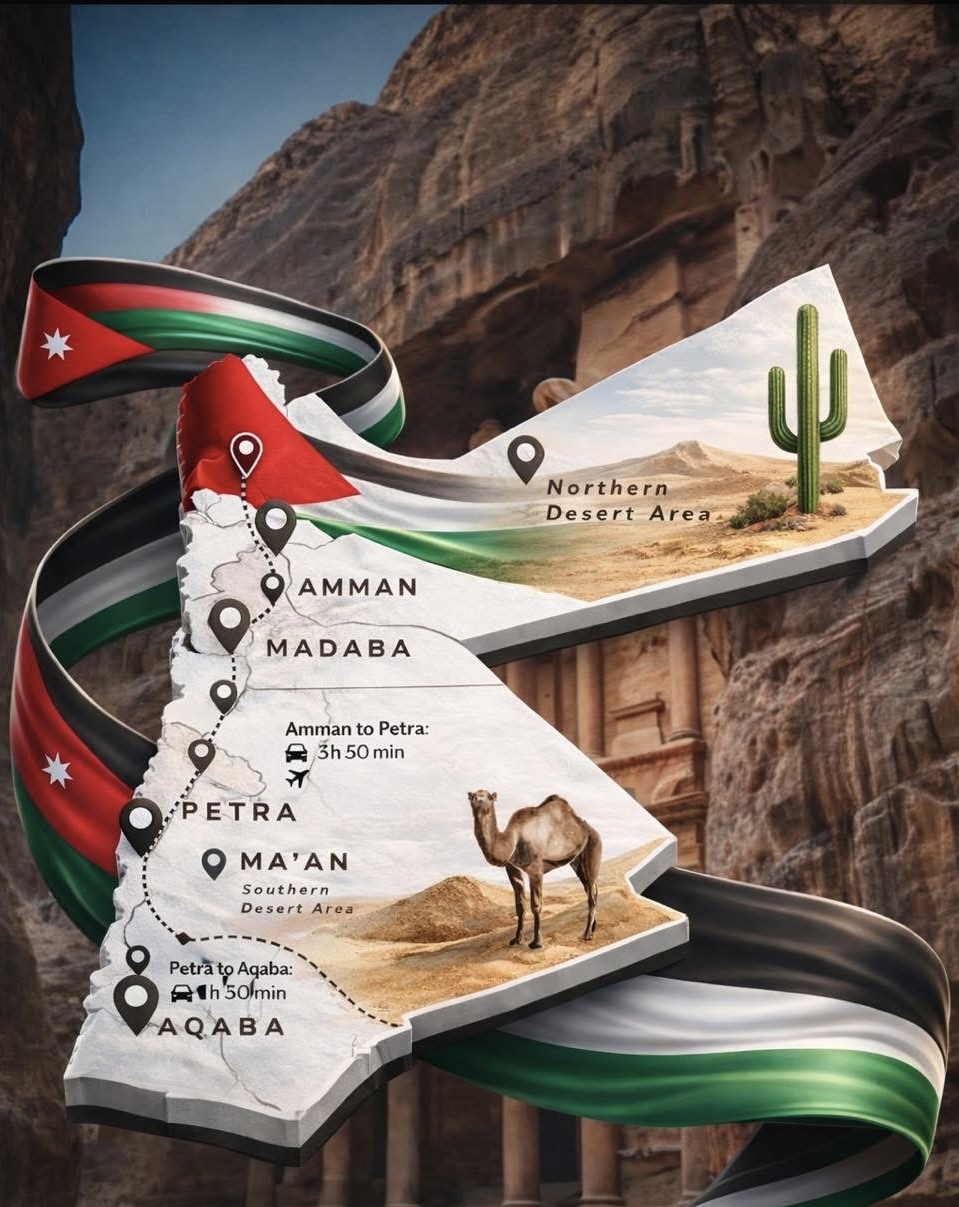
located in the heart of the Arab world. Since its establishment, it has become a model of moderation and an evolving democracy in the region, .Jordan is divided into 12 governorates: Amman (the capital), Irbid, Zarqa, Mafraq, Ajloun, Jerash, Madaba, Balqa, Karak, Tafileh, Maan and Aqaba. Each governorate encompasses a number of districts and sub-districts.
DO I NEED A VISA
Depending on your country of residence, you may or may not need a pre-arranged visa for Jordan. In general, however, most international visitors require a visa in order to enter Jordan, but many nationalities can obtain the visa on arrival. Luckily, obtaining a visa to Jordan whether or pre-arranged, or on-arrival is a relatively simple process.
Geography
Jordan’s area is 89,213 square kilometres, and it shares borders with five states: the Kingdom of Saudi Arabia from the south, the Syrian Arab Republic from the north, the Republic of Iraq from the east and the occupied Palestinian territories from the west, in addition to the maritime border it shares with Egypt in the Gulf of Aqaba.
Jordan is located geographically between the 33° and 29°N latitude lines, and 39° and 34°E longitude lines, giving the country a moderate desert climate. Jordan’s land is arid and semi-arid, with a long summer, short winter and little rainfall. The port of Aqaba is Jordan’s only sea access. It overlooks the Red Sea, with the Kingdom’s share of the coast being a 25-kilometre-long shore.
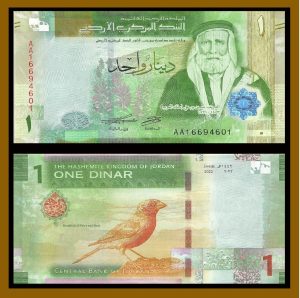
official currency
The Jordanian dinar (JOD) is the official currency of Jordan and is widely accepted throughout the country. However, many visitors often wonder about its origins and how it compares to other regional currencies. The history of the Jordanian currency is intertwined with the country’s growth and development, reflecting its status as a modern yet deeply historical destination. We’ll explore how the Jordanian dinar came into being and why it’s one of the most stable currencies in the Middle East.